
The Hierarchy of Scale: Why Proportion is the Unspoken Secret of a Harmonious Home

Have you ever walked into a room and felt an immediate sense of calm? You might attribute it to the paint color, the expensive furniture, or the amount of natural light. But as an architect, I can tell you that the true source of that comfort is something much more mathematical, yet entirely invisible to the untrained eye: proportion.
"When I am at the drafting table, I am obsessed with scale. Proportion is the unspoken language of architecture. When it is right, a room feels like a warm embrace. When it is wrong, the space feels anxious and unsettled, no matter how beautifully it is decorated."
The Human Scale
The most fundamental rule of proportion is that architecture must relate to the human body. In recent decades, there has been a trend toward massive, two-story great rooms. While they look impressive in real estate photos, they often feel cavernous and isolating in person.
The Design PrincipleI prefer to design spaces that hold you. Even in a large home, I will often drop the ceiling height in a library, a dining room, or a kitchen work zone. A 9- or 10-foot ceiling provides an elegance and a sense of intimacy that a soaring 20-foot vault simply cannot match. If I do use a vaulted ceiling, I will ground the room with a massive fireplace or heavy timber trusses to bring the visual scale back down to human proportions.
02The Architecture of the Window
Windows are the eyes of a home, and their proportions dictate the rhythm of the exterior. I lean heavily on classical proportions—often utilizing the Golden Ratio or traditional Palladian mathematics—to determine the height and width of fenestration.
The Design PrincipleA common mistake is making windows too wide and squat. Traditional window proportions are typically vertical—often twice as tall as they are wide. This verticality draws the eye upward and gives the facade an elegant, stately posture. Furthermore, the glass-to-solid-wall ratio is critical. A home needs visual weight; if it is entirely glass, it loses its sense of shelter.
 03
03
The Rule of Threes
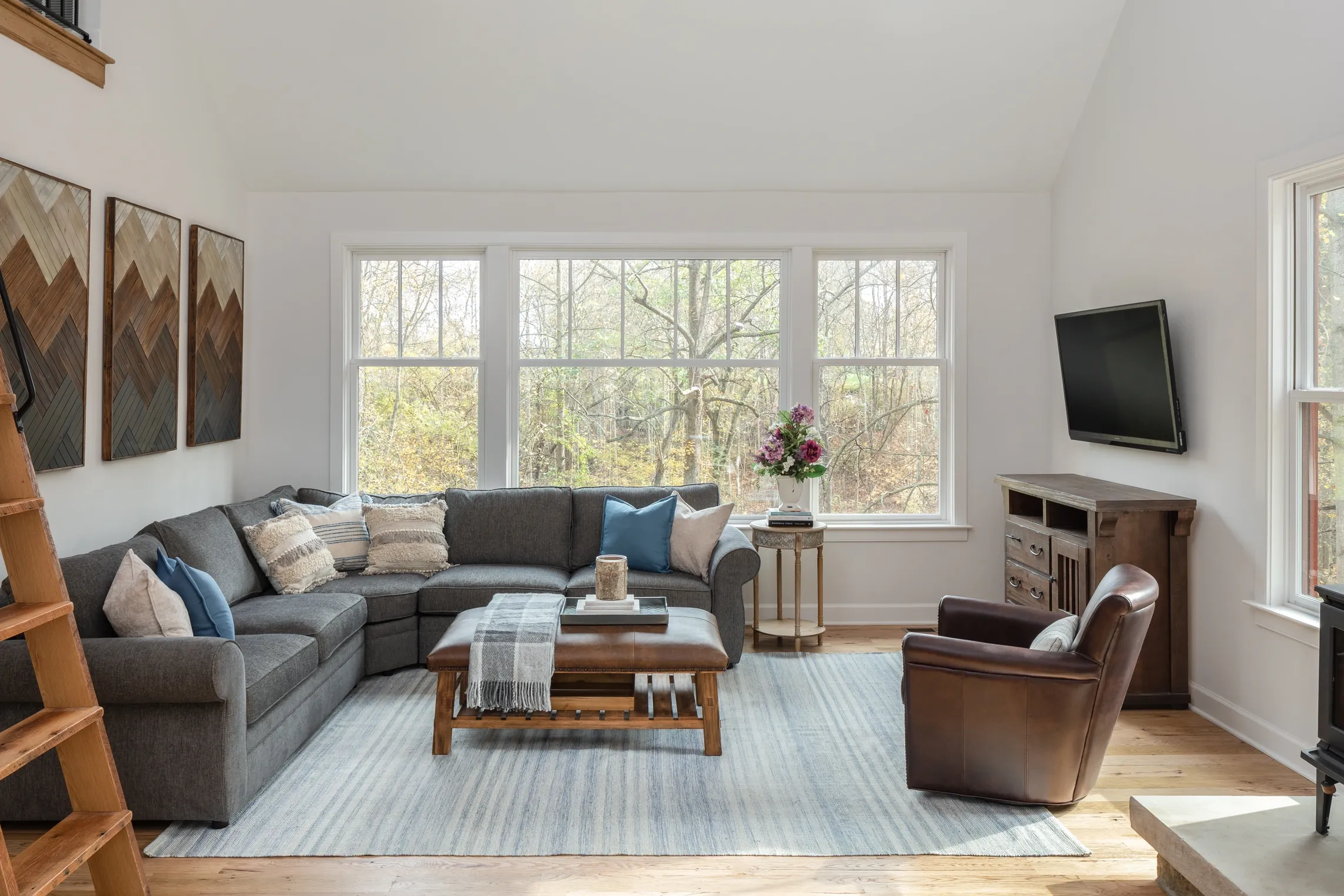
When organizing a facade or laying out built-in cabinetry, I often rely on the rule of threes—a principle that dates back to antiquity. The human brain craves symmetry and balance, and it processes odd numbers—particularly threes—as a cohesive unit.
The Design PrincipleA center mass flanked by two symmetrical wings, or a central window flanked by two smaller ones, creates an inherent sense of stability and rest.
The Quiet Discipline
Great architecture doesn't shout. It doesn't rely on gimmicks or trendy materials. It relies on the quiet, centuries-old discipline of scale and proportion.
When you get the math right, the magic follows.